“The mosques of Allah are only to be maintained by those who believe in Allah and the Last Day, establish prayer, give zakah, and fear none but Allah. It is they who are expected to be among the rightly guided.”
(Qur’an 9:18)
For more than fourteen centuries, the masjid has stood at the center of Muslim life. It is much more than a building where prayers are performed. It is a sanctuary for the soul, a school for learning, a center for community service, a refuge for those in need, and a place where faith is nurtured and generations are connected.
From the bustling cities of the Muslim world to the diverse neighborhoods of the United States, the masjid remains the beating heart of the Muslim community, bringing people together in worship, compassion, and service to Allah.
The First Institution Established by the Prophet ﷺ
When Prophet Muhammad ﷺ migrated from Makkah to Madinah, one of his very first actions was not to build a marketplace or establish a government office—it was to build a masjid.
The Prophet ﷺ and his Companions built Masjid Quba, followed shortly thereafter by Al-Masjid an-Nabawi. These mosques quickly became far more than places of worship. They served as:
- Centers of education
- Courts of justice
- Meeting places for consultation (shūrā)
- Shelters for travelers and the poor
- Community gathering places
- Schools for children and adults
- Headquarters for charitable work and public welfare
This prophetic model demonstrates that a thriving Muslim community begins with a thriving masjid.
The Masjid: A House of Allah
Allah describes the masjid as His house, deserving of honor, reverence, and care.
Allah says:
“In houses (mosques) which Allah has ordered to be raised and that His Name be remembered therein, exalting Him within them in the morning and the evenings are men whom neither commerce nor sale distracts from the remembrance of Allah, the establishment of prayer, and the giving of zakah.”
(Qur’an 24:36–37)
Every believer who enters the masjid leaves behind many distractions of the world to reconnect with Allah. Within its walls, hearts soften, sins are forgiven, and faith is renewed.
The Reward of Building and Supporting a Masjid
Islam encourages believers not only to pray in the masjid but also to help establish, maintain, and support it.
The Prophet ﷺ said:
“Whoever builds a mosque for Allah, seeking thereby the Face of Allah, Allah will build for him a house in Paradise.”
(Sahih al-Bukhari and Sahih Muslim)
This reward extends beyond constructing a new building. Every contribution toward maintaining the masjid—whether through financial support, volunteer service, cleaning, teaching, landscaping, organizing programs, or welcoming visitors—is part of sustaining one of Allah’s most beloved places.
The Masjid Builds Strong Communities
Islam emphasizes that believers are one family.
Allah says:
“Indeed, the believers are but brothers, so make peace between your brothers and fear Allah that you may receive mercy.”
(Qur’an 49:10)
The masjid transforms this brotherhood and sisterhood into reality.
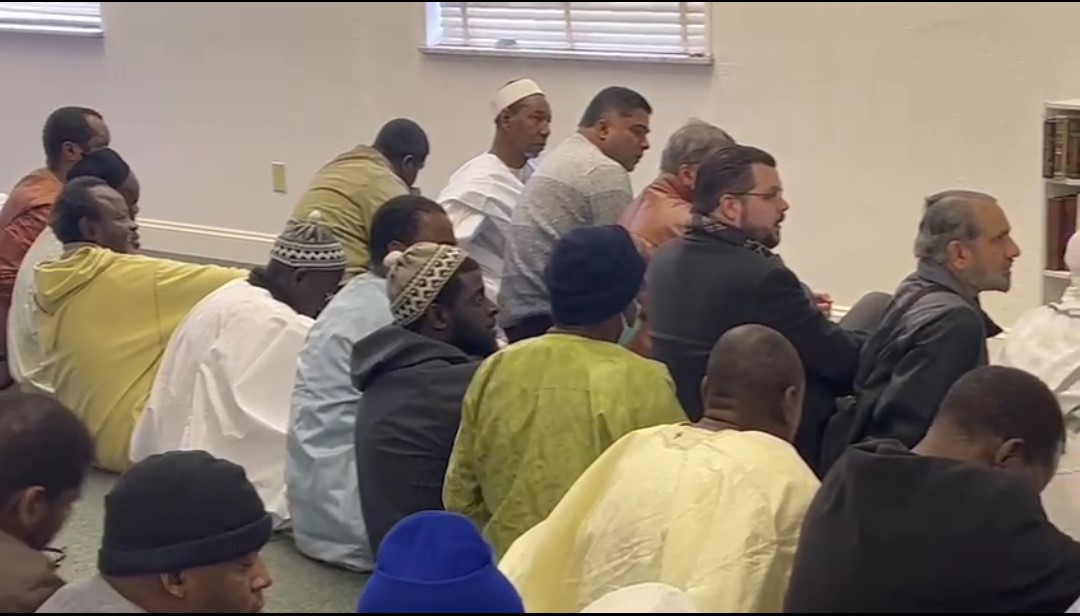
Every Friday, Muslims of different races, languages, professions, cultures, and backgrounds stand shoulder to shoulder in prayer. Rich and poor, young and old, immigrants and native-born Americans all worship the same Lord, facing the same Qiblah.
The masjid reminds us that our greatest identity is our faith.
The Importance of the Masjid in America
For Muslims living in the United States, the masjid plays an especially vital role.
Unlike many Muslim-majority countries where Islamic values are woven into daily public life, American Muslims often rely on the masjid to preserve and strengthen their religious identity.
The American masjid serves as the following:
- A place for the five daily prayers and Jumu’ah.
- A center for Qur’an education and Islamic studies.
- A school where children learn their faith and values.
- A gathering place during Ramadan, Eid, and community celebrations.
- A source of social services for families in need.
- A place for marriage ceremonies, counseling, and funeral services.
- A welcoming space for new Muslims.
- A center for interfaith dialogue and community outreach.
- A place where young Muslims build lifelong friendships rooted in faith.
For many Muslim families, the masjid becomes a second home.
It is where children take their first steps in learning the Qur’an, where teenagers develop strong Islamic identities, where adults deepen their knowledge, and where elders find companionship and spiritual comfort.
A Home for America’s Diverse Muslim Community
One of the greatest blessings of Islam in America is its remarkable diversity.
Our mosques bring together Muslims whose families come from Africa, Asia, the Middle East, Europe, and the Americas. They unite people of different ethnicities, languages, and cultures under one shared testimony:
“There is no god but Allah, and Muhammad is the Messenger of Allah.”
This diversity reflects the Qur’anic message:
“O mankind! Indeed We created you from a male and a female and made you peoples and tribes that you may know one another. Indeed, the most noble of you in the sight of Allah is the most righteous of you.”
(Qur’an 49:13)
When embraced with sincerity and mutual respect, this diversity becomes one of the greatest strengths of the American Muslim community.
The Masjid Is a Place of Mercy
The Prophet ﷺ said:
“The most beloved places to Allah are the mosques.”
(Sahih Muslim)
Every person who walks into the masjid should feel welcomed regardless of age, ethnicity, nationality, social status, or level of religious knowledge.
The masjid should be a place where:
- New Muslims find encouragement.
- Young people feel valued and heard.
- Families receive support.
- The elderly are honored.
- Those facing hardship receive assistance.
- Non-Muslim visitors are welcomed with kindness and respect.
This welcoming spirit reflects the mercy of Islam itself.
Our Responsibility Toward the Masjid
Every Muslim shares responsibility for the health and success of the masjid.
We support our mosque by:
- Attending congregational prayers regularly.
- Bringing our children to learn and participate.
- Volunteering our time and talents.
- Donating generously to sustain its programs.
- Respecting its sanctity and cleanliness.
- Welcoming newcomers with warmth and kindness.
- Participating in educational and community programs.
- Praying for its continued success.
The strength of a masjid is not measured only by its building but also by the faith, unity, and service of its congregation.
Roselawn Mosque: Serving Faith and Community
At Roselawn Mosque, we strive to continue the prophetic tradition by making our masjid a place of worship, learning, service, and unity.
We welcome Muslims from every background and seek to provide an environment where individuals and families can grow spiritually, strengthen their knowledge of Islam, and build meaningful relationships rooted in faith.
Whether through daily prayers, Jumu’ah, Qur’an classes, youth programs, charitable initiatives, educational activities, or community outreach, our mission is to serve Allah by serving His creation.
Every prayer offered, every lesson taught, every child who learns the Qur’an, every family assisted, and every visitor welcomed contributes to the ongoing legacy of the masjid.
Conclusion
The masjid is far more than bricks and mortar. It is the spiritual heart of the Muslim community—a place where faith is strengthened, knowledge is shared, generosity is practiced, and lifelong bonds are formed.
As Muslims living in America, our mosques are essential to preserving our identity, nurturing future generations, and demonstrating the beauty of Islam through worship, service, and compassion.
May Allah make our mosques places filled with His remembrance, His mercy, and His guidance. May He unite our hearts, bless those who build and support His houses, and make our communities shining examples of faith, love, and service.
Āmīn.
